- Avantika Bharad
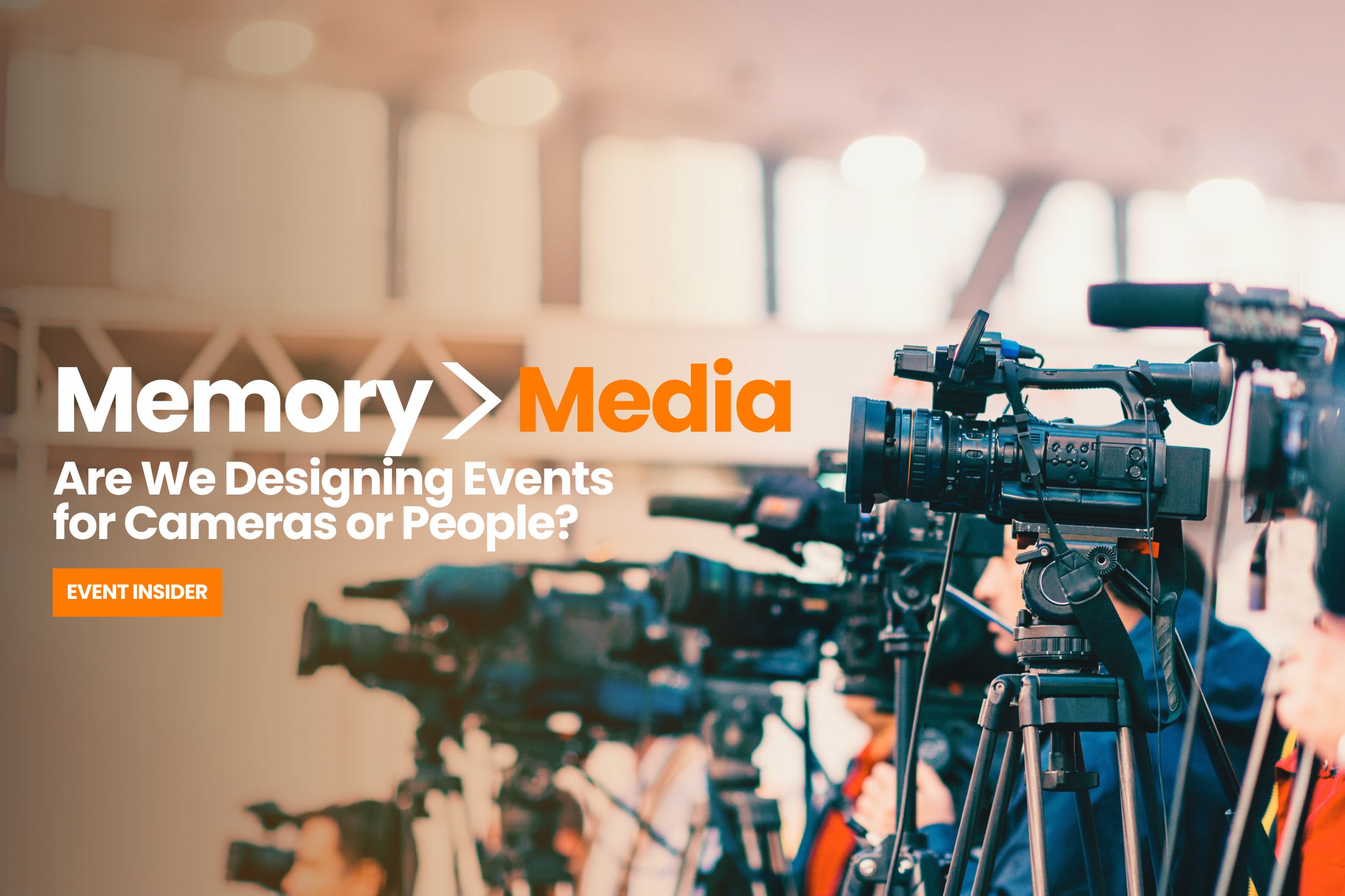
Events today are designed twice.
Once for the people in the room and once for the people watching through a screen.
Scroll through any event feed and you’ll see it – the neon signs, aesthetic installations, perfectly framed corners, curated backdrops. The rise of social media centrc events has reshaped how brands approach experiential design.
But here’s the real question : Are we creating experiences people remember, or moments people photograph?
At the intersection of experiential marketing and culture, this shift is forcing brands to rethink what engagement actually means.
Why " Social Media" Became The Default ?
Social media changed the role of events.
They’re no longer just attended. They’re broadcasted.
An attendee is now also a distributor. Every photo, reel, and story extends the reach of the event far beyond the venue.
This created a new design priority – Visual virality.
If it looks good, it travels. And that’s not wrong, but it’s not the full picture.
The Problem With Designing Only With Camera
Visually striking events attract attention. But attention is not the same as impact.
When events are designed only for photos, interactions becomes secondary and the experience becomes passive. This ends up in memory being short term about the events.
People move from one “photo spot” to another, without actually engaging with the brand.
The result? High content output. Low emotional recall.
What People Actually Remember From Events ?
People don’t remember backdrops.
They remember how they felt, who they interacted with, what they participated in and what surprised them.
Memory is built through every participation, emotion and interaction, not just the aesthetics.
And honestly, an event that looks good but feels empty is quickly forgotten.
The Right Way To Think About "Social Media"
Being shareable is powerful.
But it should be a byproduct, not the objective.
The best events design for People first. Cameras second.
When an experience is interactive, emotionally engaging and social by nature, people want to share it – not because it looks good, but because it feels good.
Designing Events That Work Both Online and Offline
The strongest experiential events balance both worlds.
They create moments worth experiencing and moments worth sharing.
This means :
- Visual elements that invite interaction
- Installations that require participation
- Spaces that encourage conversation
- Experiences that unfold, not just sit still
The goal isn’t to remove aesthetics.
It’s to embed them within experience.
What Brands Should Rethink ?
Before designing your next event, ask :
- Is this just a photo opportunity?
- Or is this an experience people will talk about after?
- Are people engaging with the brand?
- Or just using it as a backdrop?
- If phones disappeared, would this still work?
That last question reveals everything.
The Crewtangle Take
“Media” is not the problem.
Designing only for it is.
At Crewtangle, we believe the best events don’t chase content. They create moments.
Because when something is genuinely engaging, content follows naturally.
And more importantly, memory lasts longer than media.
-
Content that rocks the world
06 November, 2020 -
Design: Bringing Ideas to Life
12 November, 2020 -

Whassup Bud: One of Budweisers’ Evergreen Television Ad Campaign
20 November, 2020 -

Brands must be Gods
27 November, 2020 -

The Deffective Dictionary
08 January, 2021