
From Shelf to Experience: The New Face of FMCG Marketing

- Viraj Sawant

For years, FMCG marketing was largely about visibility. The right packaging, the right shelf placement, a memorable campaign, and enough media presence could help a product stand out.

Today, that is no longer enough.

Consumers are surrounded by choices, content, offers, and competing brand messages every day. For FMCG brands, the challenge has shifted from simply being noticed to creating experiences people can interact with, remember, and share.

The Shelf Is No Longer the Only Battleground

A product may still complete its journey on a supermarket shelf, but the brand experience often begins much earlier.

Consumers discover FMCG brands through social media, sampling activities, retail activations, pop-ups, influencer content, events, and everyday cultural moments.

Each interaction contributes to how the brand is perceived. This means FMCG marketing now needs to think beyond packaging and point-of-sale communication.

The entire consumer journey has become part of the brand.

Product Sampling Has Become an Experience

Sampling was once simple: hand someone a product and encourage them to try it.

Today, successful sampling creates a reason to stop, participate, and engage.

A beverage brand can build an interactive tasting zone. A personal care brand can create a trial experience based on individual preferences. A food brand can use live demonstrations, games, challenges, or sensory elements to turn product discovery into something memorable.

The product remains central, but the experience gives people a stronger reason to remember it.

Retail Spaces Are Becoming Brand Spaces

Retail activations are also evolving.

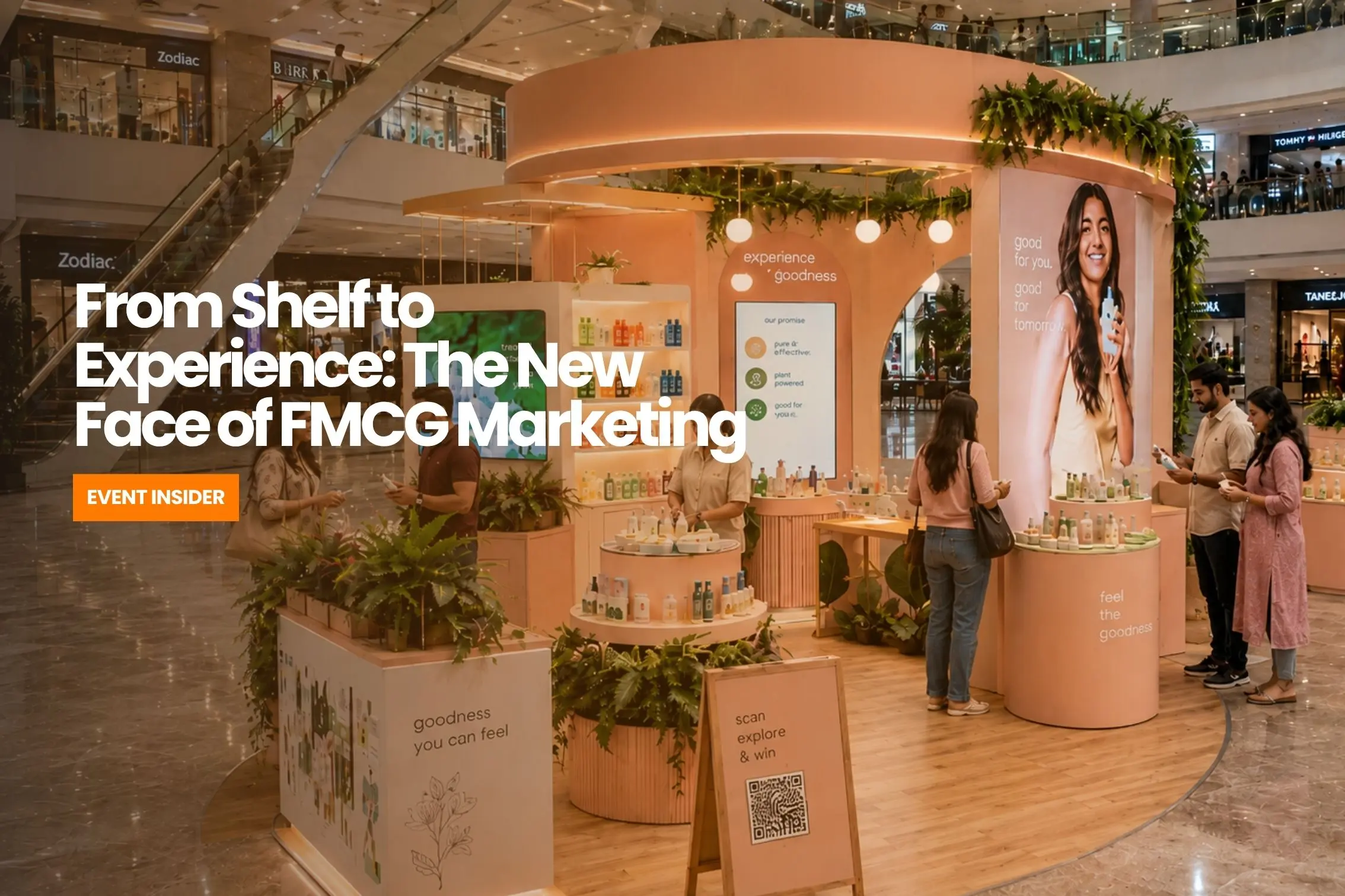
Instead of relying only on posters, displays, and promotional offers, brands are using physical environments to tell stories. Interactive displays, themed installations, product demonstrations, digital touchpoints, and photo opportunities can transform a small retail space into a brand experience.

When executed well, the consumer does more than see the product. They understand what the brand represents.

Experiences Create Content Naturally

One of the biggest advantages of experiential FMCG marketing is its ability to travel beyond the physical space.

An interesting activation can generate photographs, videos, reactions, creator content, and social conversations.

This gives brands both offline engagement and digital visibility, turning one physical experience into multiple communication opportunities.

The Crewtangle Take

The future of FMCG marketing is not about choosing between the shelf and the experience. It is about connecting both.

Strong FMCG brands will continue to invest in packaging, retail visibility, and communication, but they will also create meaningful moments around the product.

Because when consumers can experience a brand rather than simply see it, the product becomes part of a larger story, and that story is much easier to remember.