

- Viraj Sawant
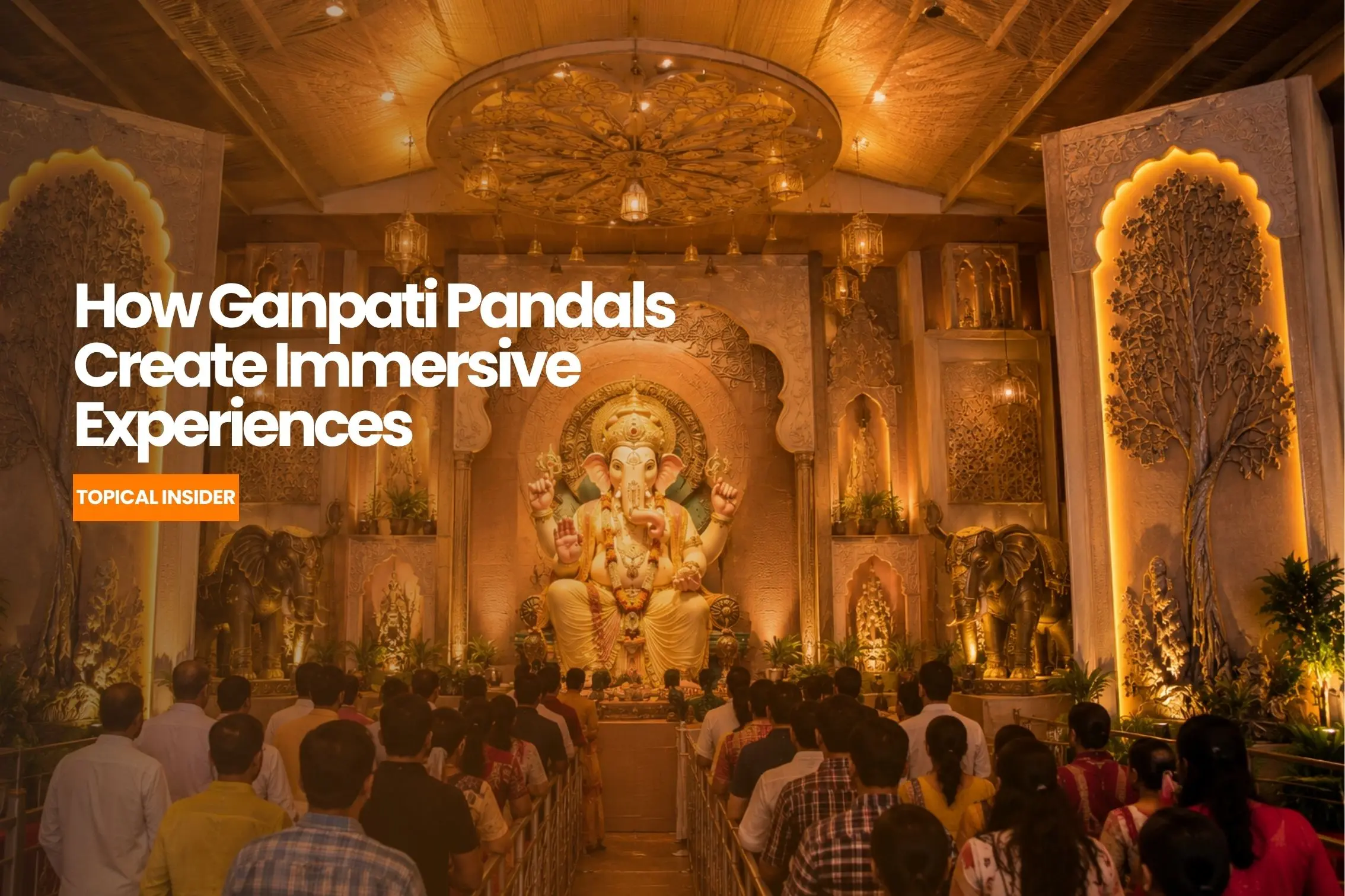
Walk into a Ganpati pandal and you rarely experience just one thing.
You notice the scale, the music, the lights, the details, the crowd, the anticipation, and finally, the moment of darshan. Together, these elements turn a temporary space into an experience people wait for, participate in, photograph, share, and remember.
For experiential marketers, Ganpati pandals are a powerful example of how storytelling, culture, design, and human participation can come together to create truly immersive experiences.
The Experience Begins Before You Enter
A memorable pandal starts building curiosity long before visitors reach the main installation.
The entrance, exterior design, music, lighting, and even the movement of the crowd create anticipation.
This is what strong experiential design does. It makes the audience feel something before the main experience even begins.
Every Pandal Has a Story
The most memorable pandals are usually built around a strong idea.
Some recreate temples, palaces, historic landmarks, or cultural settings. Others explore environmental, social, or contemporary themes.
What makes them engaging is not only the visual scale, but the way every detail supports one central story.
When the concept is clear, the visitor does not simply look at the space. They step into it.
The Journey Matters as Much as the Destination
Ganpati pandals naturally create a visitor journey.
There is an entrance, a pathway, moments of discovery, visual elements along the way, and finally the central darshan.
This progression keeps people curious and emotionally involved.
For brands, it is a valuable reminder that experiences should not be designed as isolated moments. Every touchpoint should contribute to the larger journey.
Participation Makes It Personal
People do not simply visit a Ganpati pandal.
They pray, take photographs, join celebrations, interact with installations, share content, and experience the moment with others.
That participation turns visitors into active contributors to the experience.
The same principle applies to brand experiences. The more people can interact, respond, and participate, the more memorable the experience becomes.
Culture Creates Emotional Connection
What gives Ganpati pandals their strongest impact is cultural relevance.
The rituals, music, craftsmanship, community involvement, and shared traditions create an emotional connection that decoration alone cannot achieve.
This is why authentic experiences often connect more deeply than experiences created only for visual impact.
The Crewtangle Take
At Crewtangle, we believe Ganpati pandals show experiential design at its most human.
They combine storytelling, anticipation, participation, culture, and emotion to transform a temporary space into something people genuinely want to experience.
That is also what great brand experiences should do. Not simply attract attention, but create a world people want to step into, engage with, and remember.
-
Content that rocks the world
06 November, 2020 -

Design: Bringing Ideas to Life
12 November, 2020 -

Whassup Bud: One of Budweisers’ Evergreen Television Ad Campaign
20 November, 2020 -

Brands must be Gods
27 November, 2020 -

The Deffective Dictionary
08 January, 2021